Vision and cognition compound each other
Poor vision increases confusion, fall risk and disorientation; correcting a treatable vision problem can measurably improve day-to-day function.

Elderly eye care
Most vision loss in older adults is preventable or manageable — if it's caught. Here's what good elderly eye homecare looks like.
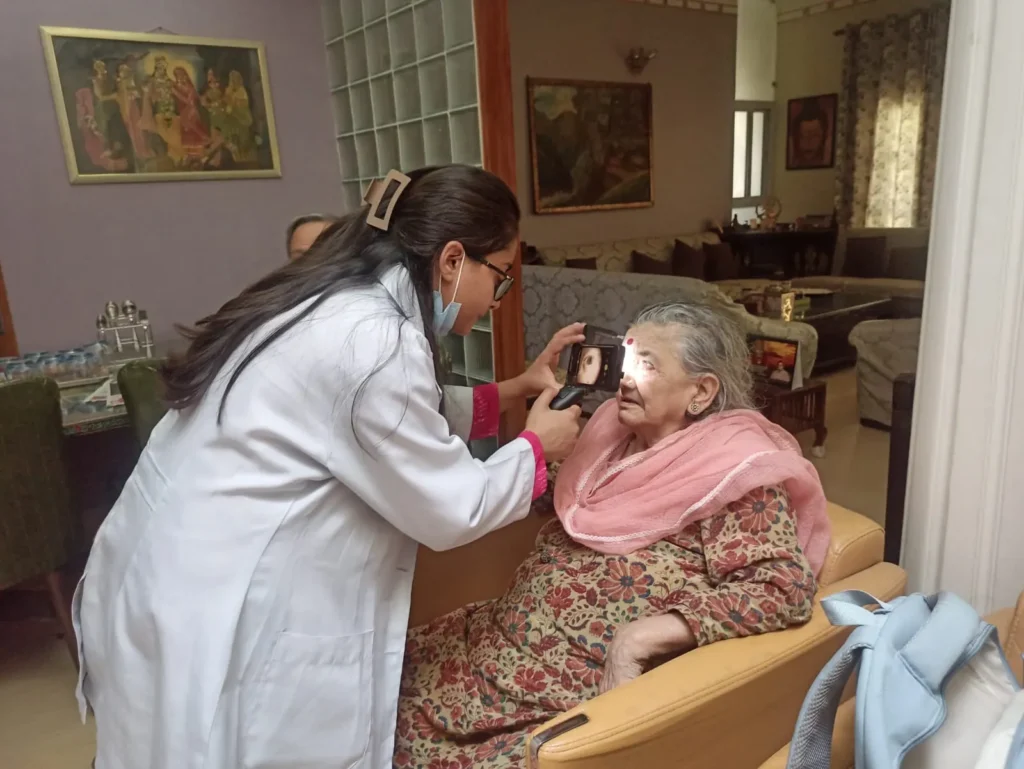
A single eye test rarely stands alone — elderly care works best as an ongoing service, not a one-off visit.
Recurring visits — quarterly for glaucoma or diabetic retina, annually for general checks — so nothing gets missed between appointments.
Glaucoma drops especially are easy to forget or apply incorrectly; a homecare visit checks technique and adherence, not just takes a reading.
The same standard as a hospital visit, without the travel, waiting room, or post-dilation glare on the drive home.
An adult child abroad or in another city sees the same report as the parent, same day.
Every result is read by an ophthalmologist, not just a technician's note — with a clear next step if something needs attention.
Dementia changes what a good eye exam looks like — the patient may not reliably report symptoms, follow instructions, or sit through a standard clinic workflow.
Poor vision increases confusion, fall risk and disorientation; correcting a treatable vision problem can measurably improve day-to-day function.
A dementia patient may not mention blurred vision or a missed medication — screening has to happen on a schedule, not by waiting for a complaint.
Testing at home, with a familiar caregiver present, produces more reliable results than an unfamiliar clinic that can trigger agitation.
Practical guidance on helping with drops, and what behaviour changes — bumping into things, avoiding stairs, withdrawing from reading — to watch for.
Across older patients, five conditions account for most preventable vision loss.
The leading cause of treatable vision loss in this age group — gradual, easy to miss until advanced.
Often symptomless until vision is already lost — regular pressure checks matter even with no complaints.
For anyone with diabetes, an annual dilated retina check is non-negotiable.
Affects central vision first — early detection changes management options significantly.
A major quality-of-life and fall-risk factor when left uncorrected.
Dilated eye exam, chronic condition monitoring, and a report shared with the whole family — wherever they are.