
World Sight Day 2026: The Eye Test Most Families Still Skip
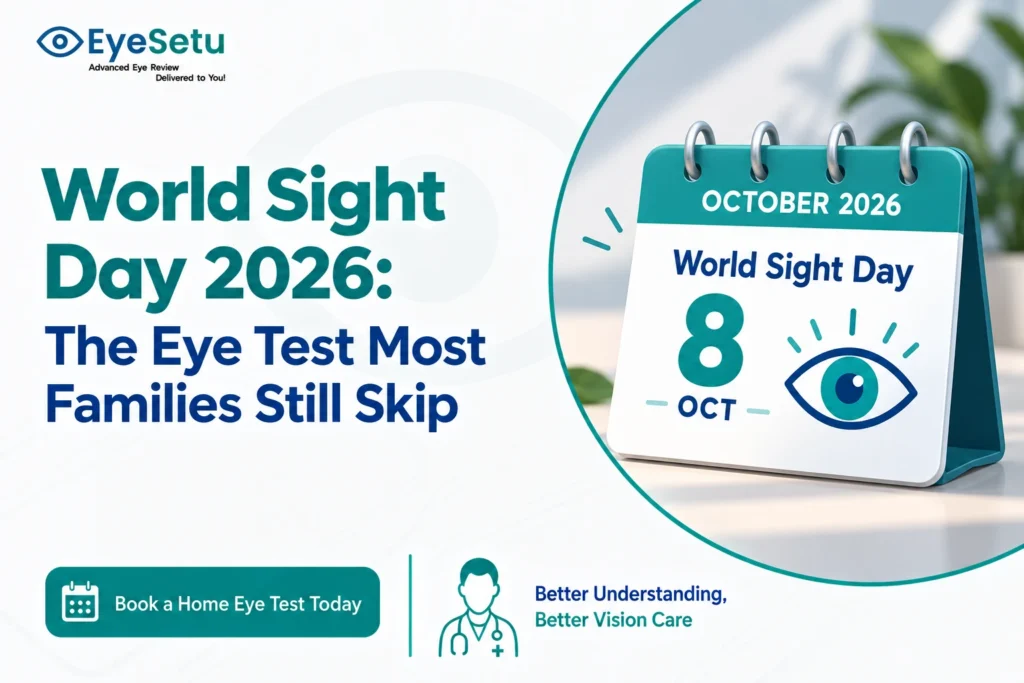
World Sight Day 2026 falls on Thursday, 8 October. It’s the yearly global eye health day led by the IAPB, and this year’s campaign is #LoveYourEyes. The message is simple: most sight loss can be prevented if it’s caught early.
Every October, World Sight Day posts fill our feeds. Most of us scroll past. This year, we’d like to ask for one small thing instead: book one proper eye test for one person in your family who hasn’t had one in a while.
Not a quick reading of letters on a chart at an optician’s counter. A real check of the health of the eye. That’s the test most Indian families skip, and it’s the one that matters most.
Why World Sight Day 2026 matters
According to the IAPB, this year’s World Sight Day is a milestone on the way to the first-ever Global Summit for Eye Health, to be held in Antigua and Barbuda on 2 November 2026. Countries are preparing commitments to end avoidable sight loss.
The scale of the problem is large. The World Health Organization estimates that at least 2.2 billion people worldwide have a near or distance vision impairment, and in about 1 billion of those cases it could have been prevented or has not yet been addressed. The two leading causes are uncorrected refractive errors (people who simply need glasses) and cataract. Both are very treatable.
India carries a large share of this burden. Indian eye specialists commonly cite an estimate of around 11.2 million people aged 40 and above living with glaucoma, with the large majority undiagnosed. And the national ICMR-INDIAB study, published in The Lancet Diabetes & Endocrinology in 2023, estimated that about 101 million Indians have diabetes, each of them at risk of diabetic eye disease.
The eye test most families skip
When most people say “I got my eyes checked”, they mean their glasses power was tested. That’s useful, but it only answers one question: how clearly can you see?
It does not answer the more important one: are your eyes healthy?
A proper eye health check looks at:
• Eye pressure and the optic nerve, to screen for glaucoma, which damages side vision first and causes no pain
• The retina, to catch diabetic and high blood pressure-related changes before they affect vision
• The lens, to see whether a cataract is forming and how much it’s affecting sight
• Eye muscle balance, which matters especially for children and people with headaches or double vision
Glaucoma and diabetic retinopathy are the two conditions that make this check so important. Both can be quietly progressing while your vision still feels “perfectly fine”. By the time you notice a problem, some of the damage may be permanent. Caught early, both can usually be managed and further loss prevented.
Who in your family needs this test most
If you’re deciding who to book first, start with anyone who:
• Is 40 or older and hasn’t had a full eye exam in the last two years
• Has diabetes, at any age, and hasn’t had a retina check in the last year
• Has high blood pressure
• Has a parent or sibling with glaucoma
• Has been on long-term steroid tablets, inhalers or eye drops
• Is a school-age child who has never had an eye test, or is struggling to see the board
• Is an elderly parent who “manages” but has stopped reading, driving at night or watching TV comfortably
In many households, this list covers almost everyone.
Why the test keeps getting postponed
It’s rarely about not caring. It’s logistics. Taking an elderly parent to a hospital in Delhi traffic, waiting for hours, going back for a second visit for scans, arranging time off. For families where children live in another city or abroad, it becomes even harder.
That’s the gap EyeSetu was built to close. An eye test at home brings a trained optometrist and portable diagnostic equipment to your living room, with the results reviewed by an ophthalmologist. You can read more about our home eye care services and the AIIMS-trained team behind them.
Your World Sight Day to-do list
1. Pick one family member who is overdue for an eye check.
2. Note any symptoms they’ve mentioned: blur, glare, needing more light, headaches, or bumping into things.
3. Note their health conditions and medicines, especially diabetes, BP and steroids.
4. Book an eye test at home in Delhi or Gurugram, at a time that suits them.
If every family reading this did just that, World Sight Day would mean something real this year.
Frequently asked questions
When is World Sight Day 2026?
World Sight Day 2026 is on Thursday, 8 October 2026. It is held every year on the second Thursday of October.
What is the theme of World Sight Day 2026?
The IAPB is running the #LoveYourEyes campaign for World Sight Day 2026, encouraging people to look after their eye health and get their eyes tested.
Why is an annual eye check-up important if my vision is fine?
Conditions like glaucoma and diabetic retinopathy often cause no symptoms in the early stages. A full eye check can detect them before vision is affected, when treatment works best.
Is an eye test at home as good as a clinic test?
A home eye test covers vision, refraction, eye muscle balance and a basic eye health screening using portable equipment. If anything needs advanced imaging or treatment, you’ll be guided to the right next step.
Medically reviewed by Dr. Shikha Gupta, MBBS, MD (Ophthalmology), AIIMS New Delhi. Co-founder & CEO, EyeSetu. 15+ years in clinical ophthalmology and telemedicine.
Make this World Sight Day count. Book one home eye test for the family member who’s most overdue, or call us on +91-9899118310.
This article is for general education and does not replace a personal eye examination.