Screen Time, AC, Monsoon Dust: Worst Month for Delhi Eyes
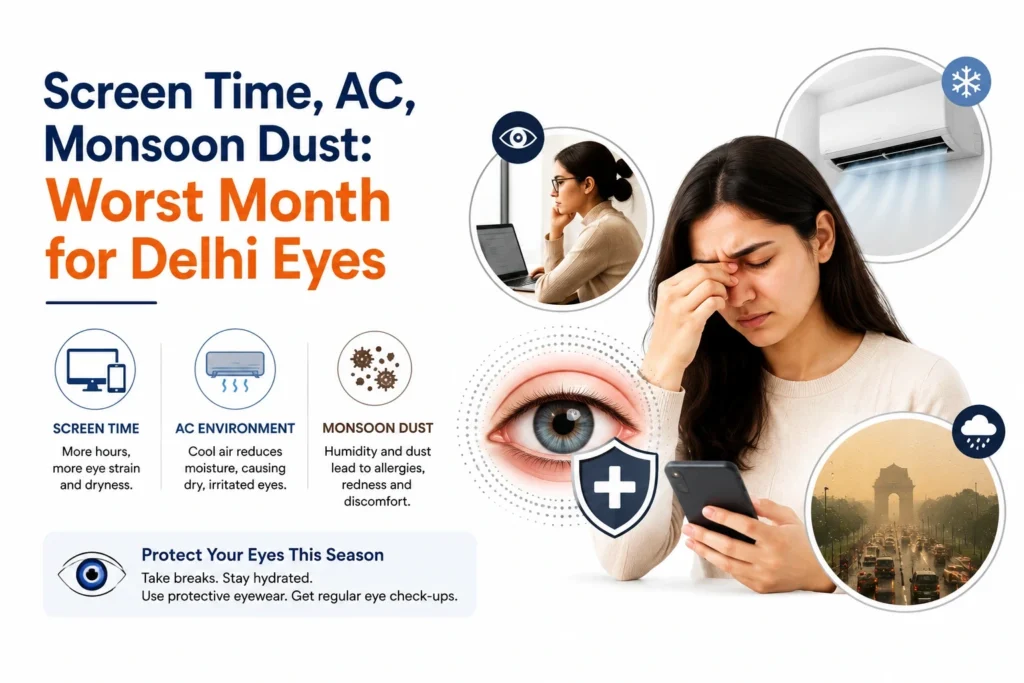
For many Delhi residents, the arrival of the monsoon is a welcome break from the scorching summer heat. The cooler weather, fresh air, and rain-soaked streets bring a sense of relief. But while the season feels refreshing, it also creates the perfect environment for bacteria, viruses, allergens, and pollutants that can affect your eye health.
If you’ve ever experienced itchy eyes after getting caught in the rain, noticed redness that wouldn’t go away, or found yourself rubbing your eyes more often during this season, you’re not imagining it. Eye-related complaints tend to increase during the monsoon, especially in crowded cities like Delhi where humidity, pollution, and waterlogging create ideal conditions for infections to spread.
That’s why monsoon eye care Delhi July becomes especially important. A few simple precautions can help protect your eyes and reduce the risk of seasonal infections before they become serious.
In this article, we’ll look at the five most common eye problems seen during the rainy season, the warning signs you shouldn’t ignore, and practical ways to keep your eyes healthy throughout the monsoon.
Why Do Eye Problems Increase During the Monsoon?
The rainy season creates a unique combination of high humidity, fluctuating temperatures, and increased exposure to bacteria and viruses. Rainwater itself isn’t always the problem. Instead, it’s the microorganisms, contaminated surfaces, and poor hygiene that often lead to eye infections.
Delhi’s weather during July also brings higher pollen levels, dust particles, and air pollution that can irritate sensitive eyes. People who wear contact lenses or spend long hours outdoors may be at an even greater risk.
Understanding these seasonal risks is the first step towards protecting your vision.
1. Conjunctivitis (Pink Eye)
One of the most common eye conditions during the monsoon is conjunctivitis, often referred to as “pink eye.” It occurs when the thin membrane covering the white part of your eye becomes inflamed due to a viral or bacterial infection. Because it spreads easily through direct contact, outbreaks are common during the rainy season.
Common symptoms include:
- Redness in one or both eyes
- Watery or sticky discharge
- Itching or irritation
- Swollen eyelids
- Increased sensitivity to light
If you develop conjunctivitis, avoid touching or rubbing your eyes, don’t share towels or pillows, and wash your hands frequently to reduce the risk of spreading the infection.
2. Allergic Eye Irritation
Not every red or itchy eye is caused by an infection.
During the monsoon, increased humidity can encourage the growth of mold, while pollen and dust continue to circulate in the air. These allergens may trigger eye irritation, especially in people who already have seasonal allergies. Typical symptoms include:
- Persistent itching
- Watery eyes
- Mild redness
- Burning sensation
- Frequent eye rubbing
Although allergy-related irritation is usually not contagious, continuous rubbing can worsen the symptoms and increase the risk of secondary infections.
3. Dry Eyes—Yes, Even During the Monsoon
It may sound surprising, but dry eyes are also common during the rainy season. Many people spend more time indoors with air conditioners running, while others work for long hours in front of digital screens. Reduced blinking during screen time can lead to dryness, irritation, and eye fatigue.
You may notice:
- A gritty sensation
- Burning or stinging eyes
- Temporary blurred vision
- Eye strain after prolonged screen use
Taking regular screen breaks, staying hydrated, and using lubricating eye drops recommended by your eye care professional can help manage these symptoms.
4. Styes and Eyelid Infections
Have you ever woken up with a painful, swollen bump on your eyelid? It could be a stye—a common bacterial infection that becomes more frequent during the monsoon. High humidity, excessive sweating, and touching your eyes with unclean hands can increase the risk of bacteria entering the glands around your eyelids.
Common signs of a stye include:
- A small, painful lump on the eyelid
- Redness and swelling
- Tenderness around the affected area
- Watery eyes
While most styles heal on their own with warm compresses, avoid squeezing or popping them, as this can worsen the infection.
5. Corneal Infections in Contact Lens Wearers
If you wear contact lenses, the rainy season calls for extra care. Humidity and poor lens hygiene can increase the risk of corneal infections, especially if lenses are worn for longer than recommended or cleaned improperly. Watch out for symptoms such as:
- Severe eye pain
- Excessive tearing
- Sensitivity to light
- Blurred vision
- Redness that doesn’t improve
If you experience any of these symptoms, remove your contact lenses immediately and consult an eye specialist. Delaying treatment could lead to serious complications.
Simple Monsoon Eye Care Tips Everyone Should Follow
Good eye health doesn’t require complicated routines. A few everyday habits can go a long way in protecting your eyes during the rainy season.
- Wash Your Hands Frequently: Many eye infections spread through direct contact. Washing your hands before touching your eyes or handling contact lenses can significantly reduce the risk.
- Avoid Rubbing Your Eyes: Even if your eyes feel itchy, rubbing them can transfer germs and worsen irritation.
- Keep Your Contact Lenses Clean: Always follow proper lens hygiene. Replace your lenses as recommended and never sleep while wearing them unless advised by your eye care professional.
- Wear Protective Eyewear Outdoors: Protective glasses or sunglasses can help shield your eyes from dust, rain splashes, and airborne pollutants.
- Don’t Share Personal Items: Avoid sharing towels, handkerchiefs, eye makeup, or eye drops, especially if someone around you has an eye infection.
- Give Your Eyes Regular Breaks: If you spend long hours on digital devices, remember the 20-20-20 rule. Every 20 minutes, look at something 20 feet away for 20 seconds to reduce eye strain.
When Should You Visit an Eye Specialist?
While mild irritation may improve with proper care, some symptoms should never be ignored. Seek medical attention if you experience:
- Persistent redness lasting more than two days
- Eye pain
- Sudden blurred or reduced vision
- Thick yellow or green discharge
- Swelling around the eyes
- Increased sensitivity to light
As Dr. Varun Gogia, Director, ICLINIX, explains, “Many eye infections can appear mild initially but may worsen if left untreated. Early diagnosis and timely treatment are essential to prevent complications and protect long-term vision.”
Prompt treatment not only helps you recover faster but also reduces the risk of spreading infections to others. So, if you wish to get your eye tested, then call EyeSetu experts at +91-9899118310 to book your home visit. Also, you can also fill in the form to book eye test at home, and our experts will reach out to you as per your convenience. You can also download the EyeSetu app from the Google Play Store or Apple App Store by scanning the QR code below to book appointments, manage your eye care, and access EyeSetu’s services with ease.
Scan the QR code below to download the EyeSetu app on your Android or iPhone and book your eye test in just a few taps.
| Download EyeSetu App on Andriod | EyeDownload EyeSetu App on iOS |
| Get it on Google Play | Download on the App Store |
Why Preventive Eye Care Matters During the Monsoon?
Most people visit an eye specialist only after symptoms become uncomfortable. However, preventive eye care is just as important as treatment. Following good hygiene practices, managing allergies, and scheduling regular eye examinations can help identify potential problems before they affect your vision.
With increasing humidity, pollution, and seasonal infections, monsoon eye care Delhi July should be part of your family’s health routine, not just an afterthought.
Frequently Asked Questions | Monsoon Eye Care Delhi July
- Can rainwater directly cause an eye infection?
Rainwater itself doesn’t usually cause infections. However, exposure to contaminated water, poor hygiene, or rubbing your eyes with dirty hands can increase the risk.
- Is conjunctivitis common during the monsoon?
Yes. Viral and bacterial conjunctivitis are more common during the rainy season because they spread easily in humid conditions.
- Can I wear contact lenses during the monsoon?
Yes, but maintaining proper lens hygiene is extremely important. If your eyes become red, painful, or irritated, remove your lenses and consult an eye specialist.
- How can I protect my child’s eyes during the rainy season?
Encourage frequent handwashing, avoid sharing towels, ensure children don’t rub their eyes, and seek medical advice if redness or discharge develops.
- When should I schedule an eye examination?
If you notice persistent redness, blurred vision, pain, or recurring irritation, don’t wait for the symptoms to worsen. Early evaluation can help prevent complications.
About the Author
Dr. Shikha Gupta is the Co-founder & CEO of EyeSetu and an ophthalmologist with over 15 years of experience in clinical practice and telemedicine. An AIIMS alumna (MBBS, MD Ophthalmology, Gold Medalist), she is also the former Senior Consultant and Additional Professor, (RPC) AIIMS, New Delhi. She is committed to making quality eye care accessible to everyone through technology-driven innovation.
Medical Disclaimer
This article is intended for educational purposes only and should not be considered a substitute for professional medical advice, diagnosis, or treatment. If you experience persistent eye discomfort, vision changes, or signs of an eye infection, consult a qualified ophthalmologist promptly.