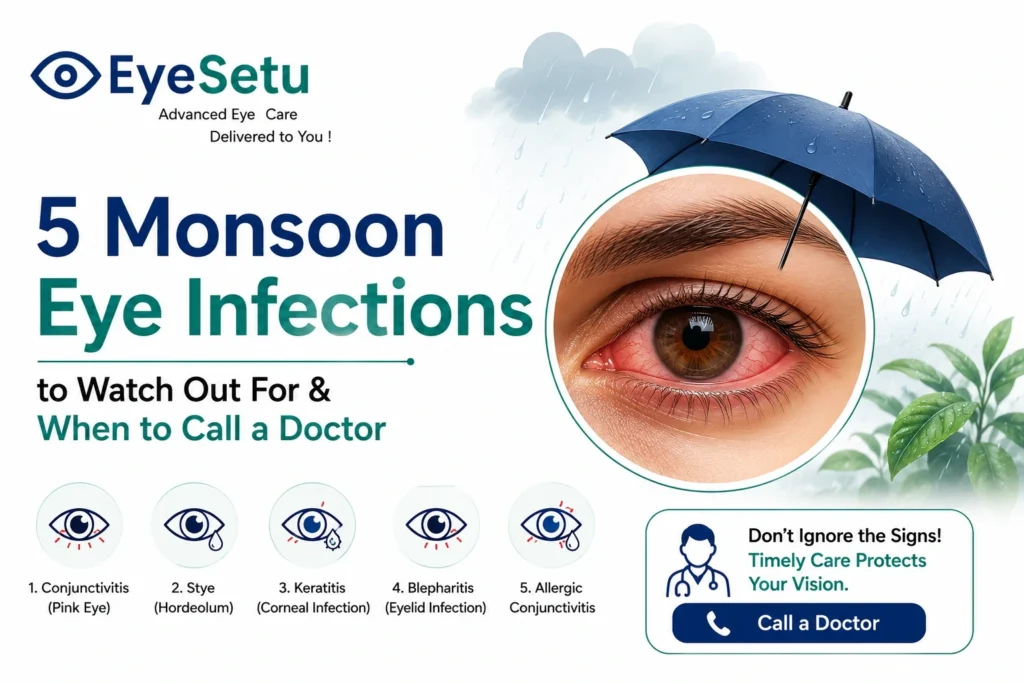
5 Monsoon Eye Infections to Watch Out For & When to Call a Doctor
The first rain of the season brings welcome relief from the summer heat, but it also creates the perfect environment for bacteria, viruses, and fungi to thrive. During the monsoon, hospitals and eye clinics often see a rise in patients complaining of red eyes, irritation, watering, swelling, and blurred vision.
While some eye infections are mild and resolve with timely treatment, others can progress quickly if ignored. What starts as slight redness or itching may develop into a more serious infection that affects your vision.
Understanding the signs early and seeking the right monsoon eye infection treatment can help prevent unnecessary complications. More importantly, a timely eye examination can determine whether the problem is limited to the outer surface of the eye or if it requires further evaluation by an ophthalmologist.
With EyeSetu’s AI-powered retinal examination, patients can now access professional eye screening at home using hospital-grade retinal imaging equipment. This allows trained eye care professionals to assess eye health conveniently and recommend specialist care whenever necessary.
Why Are Eye Infections More Common During the Monsoon?
The rainy season creates conditions that allow microorganisms to spread more easily. Increased humidity, stagnant water, contaminated hands, shared towels, and frequent exposure to rainwater all contribute to a higher risk of eye infections.
Children, office-goers who commute daily, contact lens users, senior citizens, and people with diabetes may be more susceptible during this season.
Another common mistake is assuming that every red eye is “just an allergy.” While allergies are common during the monsoon, redness may also indicate an infection that requires medical attention.
1. Viral Conjunctivitis (Pink Eye)
One of the most common eye infections during the rainy season is viral conjunctivitis. It spreads easily through direct contact, contaminated surfaces, or shared personal items, which is why entire households or workplaces may be affected within a few days.
Common symptoms include:
- Redness in one or both eyes
- Excessive watering
- Itching or irritation
- Light sensitivity
- Swollen eyelids
Although many cases improve with supportive treatment, it is important to consult an eye care professional for an accurate diagnosis. Self-medicating with over-the-counter eye drops may worsen certain conditions.
2. Bacterial Conjunctivitis
Unlike viral conjunctivitis, bacterial infections often produce thick yellow or green discharge that causes the eyelids to stick together, especially after waking up.
Symptoms may include:
- Persistent redness
- Sticky eye discharge
- Swollen eyelids
- Eye discomfort
Bacterial conjunctivitis usually requires prescription medication, making early diagnosis important.
3. Stye (Eyelid Infection)
A stye is a painful, red swelling that develops near the edge of the eyelid due to blockage and infection of an oil gland. Although it may resemble a small pimple, squeezing or attempting to drain it at home can increase the risk of infection. Warm compresses often help, but persistent swelling, increasing pain, or recurrent styles should always be evaluated by an eye specialist.
When Should You See an Eye Doctor?
Many people assume that redness or irritation will improve on its own. While some mild infections may settle with appropriate treatment, certain symptoms should never be ignored. Seek immediate medical attention if you experience:
- Severe eye pain
- Sudden blurred or reduced vision
- Sensitivity to light that doesn’t improve
- Thick yellow or green discharge
- Swelling that worsens rapidly
- An eye injury followed by redness or pain
- Symptoms that continue for more than 24 to 48 hours despite basic care
It’s also important to remember that not every red eye is caused by an infection. In some cases, redness may be linked to glaucoma, uveitis, corneal ulcers, or other eye conditions that require urgent treatment. An eye examination helps identify the underlying cause and ensures you receive the right care at the right time.
Why an Eye Examination Matters Even During an Infection?
While treating the infection is the first priority, an eye examination also helps assess the overall health of your eyes. Certain medical conditions, such as diabetes, hypertension, glaucoma, and retinal disorders, can affect long-term vision and may go unnoticed until they become more advanced.
This is where EyeSetu’s AI-powered retinal examination adds value. During a home visit, trained eye care professionals use hospital-grade retinal imaging equipment to capture high-quality images of your retina. These images are analysed using AI and reviewed by qualified ophthalmologists to identify retinal abnormalities that may require further evaluation.
For people living with diabetes, hypertension, high myopia, glaucoma, age-related macular degeneration (AMD), optic neuropathies, or those advised to undergo retinal monitoring during pregnancy or while taking medications such as GLP-1 receptor agonists (including Ozempic), regular retinal examinations play an important role in protecting long-term vision.
While retinal imaging is not used to diagnose common surface infections like conjunctivitis, it helps provide a more complete understanding of your eye health and supports early detection of retinal diseases that often develop silently.
Dr. Shikha Gupta, Co-founder & CEO of EyeSetu, says, “Many people seek medical attention only when redness or discomfort begins to interfere with daily life. However, an eye examination gives us an opportunity to assess much more than the visible symptoms. Using AI-powered retinal imaging and hospital-grade equipment, we can detect retinal changes early and guide patients towards timely specialist care whenever required.”
Simple Ways to Protect Your Eyes This Monsoon
Although not every infection can be prevented, a few simple habits can significantly reduce your risk.
- Wash your hands frequently and avoid touching your eyes.
- Never share towels, handkerchiefs, eye makeup, or contact lenses.
- Replace contact lenses and storage solution as recommended by your eye care professional.
- Wear protective eyewear if you work outdoors or in dusty environments.
- Avoid swimming in contaminated pools or stagnant water during the monsoon.
- If you develop redness or discharge, avoid self-medicating with steroid eye drops unless prescribed by an ophthalmologist.
- Schedule a comprehensive eye examination if you have diabetes, hypertension, glaucoma, or other conditions that increase your risk of eye disease.
Small precautions today can help prevent more serious eye problems later.
Book Your Eye Examination with EyeSetu
So, if you’re experiencing eye discomfort during the monsoon or simply want to stay on top of your eye health, EyeSetu makes professional eye care more accessible.
Using hospital-grade retinal imaging equipment, EyeSetu’s trained eye care professionals conduct AI-powered retinal examinations from the comfort of your home. The examination helps screen for retinal conditions, supports early detection, and connects you with specialist care whenever needed.
To book your home eye examination:
- Call: +91-9899118310
- Fill out the enquiry form on our website
- Scan the QR code below to download the EyeSetu app
Download EyeSetu App on Android
Download EyeSetu App on iOS
With the app, you can book appointments, manage your eye care journey, and stay connected with experienced eye care professionals.
| Download EyeSetu App on Andriod | EyeDownload EyeSetu App on iOS |
| Get it on Google Play | Download on the App Store |
Don’t Let a Minor Eye Infection Become a Major Problem
The monsoon season brings many changes, including a higher risk of eye infections. While mild redness or irritation may seem harmless, ignoring persistent symptoms can sometimes lead to more serious complications.
Seeking timely monsoon eye infection treatment and getting your eyes examined early can make all the difference. If you have diabetes, hypertension, glaucoma, or other conditions that affect eye health, regular retinal screening is equally important, even when your vision feels normal.
With EyeSetu’s AI-powered retinal examination and hospital-grade retinal imaging equipment, you can access high-quality eye screening from the comfort of your home and take a proactive step towards protecting your vision.
About the Author
Dr. Shikha Gupta is the Co-founder & CEO of EyeSetu and an ophthalmologist with over 15 years of experience in clinical practice and telemedicine. An AIIMS alumna (MBBS, MD Ophthalmology, Gold Medalist) and former Senior Consultant at AIIMS, she is committed to making quality eye care accessible through innovation, AI-powered retinal screening, and technology-enabled healthcare.
Medical Disclaimer
This article is intended for educational purposes only and should not be considered a substitute for professional medical advice, diagnosis, or treatment. If you experience persistent redness, pain, blurred vision, or any sudden change in your eyesight, consult a qualified ophthalmologist promptly. Early diagnosis and appropriate treatment are essential to protect your vision.