Diabetic Retinopathy: Why India’s Diabetes Epidemic Is an Eye Emergency
For millions of Indians, managing diabetes means controlling blood sugar levels, taking medication on time and making healthier lifestyle choices. One thing that doesn’t get as much attention, though, is how diabetes can affect your eyes.
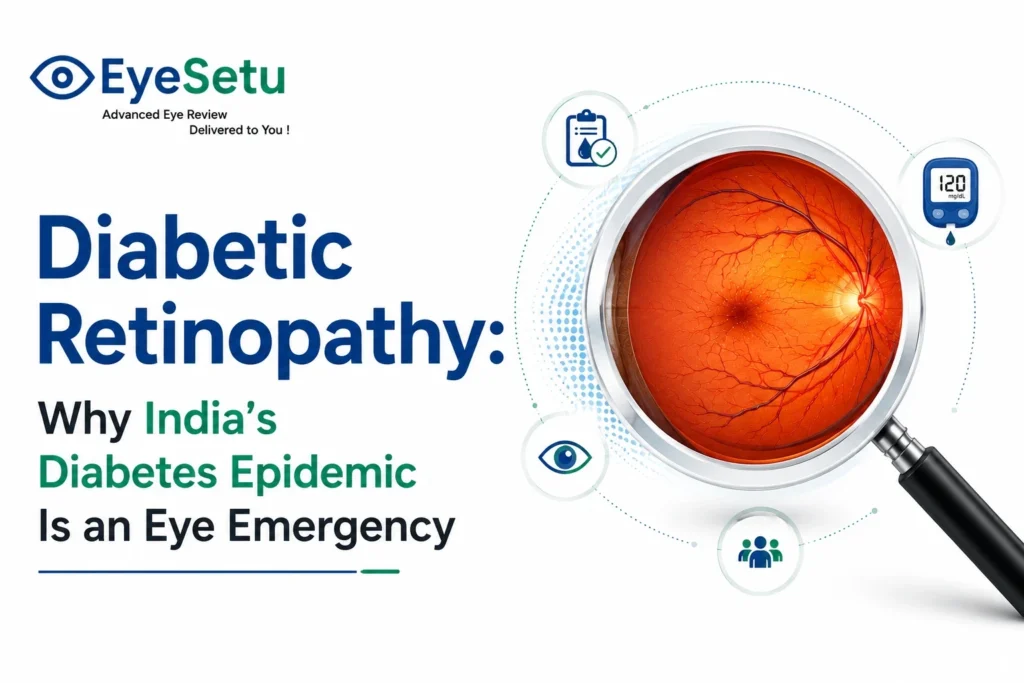
Diabetes is not just bad for your heart, kidneys or nerves. It can also damage the small blood vessels in your retina, the light-sensitive layer at the back of your eye that you need for clear vision. This is called diabetic retinopathy, and is one of the leading causes of preventable blindness in adults.
Knowing diabetic retinopathy symptoms India is scary as it does not usually manifest until the disease has progressed. The damage keeps adding up but many people can still see well. By then treatment may be more difficult.
The good news is diabetic retinopathy is largely preventable. Regular eye screenings, good diabetes management and early medical intervention can significantly reduce vision loss.
In this guide, you’ll learn what diabetic retinopathy is, why people with diabetes are at risk, the symptoms you should never ignore, and how regular eye exams can help protect your eyesight.
What Is Diabetic Retinopathy?
Diabetic retinopathy is an eye disease that can cause damage to the tiny blood vessels in the retina over a long period of time due to high blood sugar.
With time these blood vessels may weaken, leak fluid or become blocked, which stops the retina from working properly. In later stages, the eye may develop weak new blood vessels that bleed easily and may cause severe vision loss.
Unlike many other eye conditions, diabetic retinopathy doesn’t occur overnight. It develops slowly over a number of years so regular eye examinations are vital for anyone who has diabetes.
Why Is It Becoming a Big Problem in India?
India is often called the “diabetes capital of the world” and has millions of adults living with Type 1 or Type 2 diabetes. As the number of cases of diabetes increases, so does the number of people at risk of developing diabetic eye disease.
What’s more alarming is that many people don’t know diabetes can affect their eyesight until they start having problems with their vision.
Monitoring blood sugar levels is very important, as is regular eye examinations. Early diagnosis of diabetic retinopathy enables treatment before irreparable damage occurs.
Early Diabetic Retinopathy Symptoms in Indian Patients Need To Know
In the early stages of diabetic retinopathy there are often no symptoms at all. This is why regular eye exams are recommended even if your vision seems perfectly fine. If the condition progresses, you might notice: –
- Blurred or shifting vision
- Difficulty reading or focusing
- Dark spots or floaters in your vision
- Colours appear washed out
- Night blindness
- Dark or blank areas in your vision
- In severe cases it may lead to sudden blindness
These symptoms do not mean you have diabetic retinopathy but should never be ignored. Eye exams can help to determine the cause and prevent further problems.
Who is Most at Risk?
Anyone with diabetes can develop diabetic retinopathy. You are at higher risk if:
- History of having diabetes for years
- High blood sugar levels are often
- High blood pressure or high cholesterol.
- Smokes or tobacco products
- Diabetes during Pregnancy
- Regular diabetes or eye checks missed
Regular eye exams are important even if your diabetes is well controlled. “Early changes in the retina often occur without any obvious symptoms. It’s better to book eye test at home with professionals like EyeSetu to know if you’re suffering from any of the diseases mentioned and get the treatment on time.
Can You Prevent Diabetic Retinopathy?
Although having diabetes increases your risk, there are several steps you can take to protect your vision.
- Keep your blood sugar levels within your target range.
- Monitor your blood pressure and cholesterol regularly.
- Follow your diabetes treatment plan.
- Eat a balanced diet and stay physically active.
- Avoid smoking.
- Schedule a comprehensive eye examination every year—even if your vision seems normal.
As Dr. Shikha Gupta, Co-founder & CEO of EyeSetu , explains, “Many diabetic eye complications develop silently, without affecting vision in the early stages. Regular retinal screening allows doctors to detect changes early and begin treatment before permanent damage occurs.”
Why Is Annual Eye Screening Essential for People with Diabetes?
Many people believe that if they can see clearly, their eyes are healthy. Unfortunately, diabetic retinopathy doesn’t work that way. By the time vision becomes blurry, the disease may already be advanced. That’s why eye specialists recommend that every person with diabetes undergo a comprehensive retinal examination at least once a year, even if they have no symptoms.
Book Eye Test at Home: How EyeSetu Supports Early Detection?
At EyeSetu we know that the best way to prevent preventable vision loss is by early identification, and especially in India, diabetic retinopathy symptoms often go unrecognised until the condition has progressed.
Our thorough eye screening services are designed to pick-up early indicators of retinal illness such as diabetic retinopathy. We use innovative screening technologies and skilled medical review to help people understand their eye health and lead them to timely specialist care when required.
As Dr. Varun Gogia, Chief Advisor, EyeSetu and Director, ICLINIX Group of Hospitals often says, early retinal screening can detect diabetes-related damage to the eye before it begins to compromise vision. That’s why regular eye exams are an important aspect of diabetes care, even if your vision seems fine.
Regular eye screenings can help protect your vision and promote better long-term health and quality of life.
Frequently Asked Questions
1 Can diabetic retinopathy occur even if my vision is normal?
Yes. In its early stages, diabetic retinopathy often causes no noticeable symptoms. That’s why regular eye examinations are essential.
2 Who should get screened?
Everyone living with Type 1 or Type 2 diabetes should have regular retinal examinations, regardless of whether they wear glasses or have vision problems.
3 Can controlling blood sugar prevent diabetic retinopathy?
Good blood sugar control significantly reduces the risk of diabetic retinopathy and slows its progression, but regular eye screenings are still necessary.
4 Is diabetic retinopathy reversible?
Damage already caused to the retina cannot always be reversed. However, early diagnosis and timely treatment can prevent further vision loss.
5 How often should I get my eyes checked if I have diabetes?
Most people with diabetes should have a comprehensive eye examination once every year, or more frequently if recommended by their ophthalmologist.
Take Charge of Your Eye Health Today
Living with diabetes means taking care of more than just your blood sugar—it also means protecting your eyesight.
If you have diabetes, don’t wait for vision problems to appear. If you choose to book eye test at home today from EyeSetu, you’ll be able to detect diabetic retinopathy early and protect your vision for the future.
About the Author
Dr. Shikha Gupta is the Co-founder & CEO of EyeSetu and an ophthalmologist with over 15 years of experience in clinical practice and telemedicine. An AIIMS alumna (MBBS, MD Ophthalmology, Gold Medalist), she is dedicated to making quality eye care accessible through innovation and technology.
Medical Disclaimer
This article is intended for educational purposes only and should not be considered a substitute for professional medical advice, diagnosis, or treatment. If you have diabetes or notice any changes in your vision, consult a qualified ophthalmologist promptly.