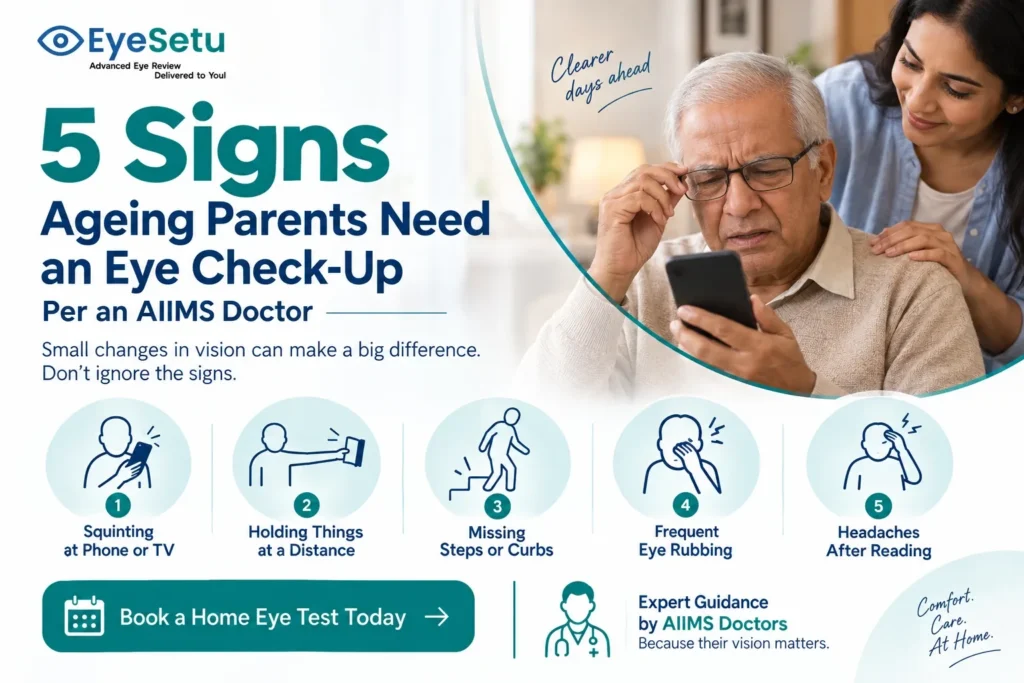
5 Signs Ageing Parents Need an Eye Check-Up, Per an AIIMS Doctor
“It’s just old age” is one of the most common — and most costly — assumptions families make about a parent’s changing eyesight. Some vision changes genuinely are a normal part of ageing. Others are early signs of conditions like glaucoma or diabetic retinopathy, which cause permanent damage specifically because they’re mistaken for normal ageing and left unchecked until vision loss is already underway.
Dr. Shikha Gupta, who spent 17 years at AIIMS RP Centre — one of North India’s leading ophthalmology institutes — before founding EyeSetu, has seen this pattern often enough to know exactly which signs deserve a proper eye exam rather than a shrug. Here are five worth paying attention to.
1. They’ve Started Avoiding Reading, Not Just Struggling With It
There’s a difference between a parent saying “the print is a bit small” and a parent who has quietly stopped reading altogether — the newspaper unopened, letters left for someone else to read aloud, WhatsApp messages replied to with voice notes instead of text. This shift often happens gradually enough that families don’t register it as a red flag; it just looks like changing habits.
In reality, this kind of avoidance is frequently a sign that near vision has deteriorated more than the person is willing to admit, sometimes because they’ve adapted around it rather than dealt with it. Cataracts, presbyopia progressing past what current glasses correct for, or early macular degeneration can all show up this way.
2. They’re Bumping Into Things or Misjudging Steps More Than Before
Occasional clumsiness is normal at any age. A pattern of misjudging distances — missing a step, bumping into furniture that hasn’t moved, spilling things while pouring — is worth a closer look, particularly because it can point toward peripheral vision loss.
This is the symptom most closely associated with glaucoma, a condition that damages the optic nerve and eats away at peripheral vision long before central vision is affected. Because central vision often stays sharp well into the disease’s progression, a parent can genuinely believe their eyesight is “fine” while significant peripheral vision has already been lost. India has an estimated 11.2 million people aged 40 and above living with glaucoma, and by most estimates, roughly 80% of them don’t know they have it. Physical clumsiness that wasn’t there before is one of the few outward clues families can actually notice before a formal test does.
3. They Need Much Brighter Light Than They Used To
If a parent has started complaining that a room “isn’t bright enough” even when the lighting hasn’t changed, or has taken to using a torch or phone flashlight for tasks they used to manage under normal light, that’s worth paying attention to. Difficulty adjusting to changes in lighting, or needing significantly more light to see clearly, is a common early symptom of cataracts, and can also indicate age-related macular degeneration.
It’s an easy sign to miss because it develops slowly, and a parent who lives alone may simply keep adding more lamps to their home without ever mentioning why.
4. Their Driving Has Changed, Especially at Night
If your parent still drives, changes in driving behaviour are a genuinely useful early warning sign — avoiding night driving where they didn’t before, driving noticeably slower than the flow of traffic, sitting closer to the windshield, or family members feeling less comfortable being driven by them recently. Night vision difficulty in particular is often one of the earliest noticeable symptoms of cataracts, since the way light scatters through a clouding lens is especially disruptive in low light and against oncoming headlights.
If you’ve noticed this shift, or if your parent has mentioned it themselves even in passing, it’s a stronger signal than most people realise.
5. They Mention “Foggy” or “Wavy” Vision, Even Briefly
This is the one sign that shouldn’t wait for a routine check-up — it’s worth booking an exam soon after it’s mentioned. Vision described as foggy, cloudy, or having a dark patch can point to cataracts or advanced glaucoma. Straight lines appearing wavy or bent is a specific and important symptom of macular degeneration, and sudden vision changes — even temporary ones — can occasionally signal a retinal issue that benefits from prompt evaluation.
Parents, particularly those managing diabetes, sometimes mention these symptoms almost in passing during a phone call, without realising the significance. Diabetic retinopathy is a leading cause of vision loss in older adults with diabetes, and often has no symptoms at all until it’s fairly advanced — which is exactly why any vision complaint from a parent with diabetes deserves a proper look rather than being filed away as a minor comment.
Why “Wait and See” Is the Wrong Approach Here
The three conditions behind most of these signs — glaucoma, diabetic retinopathy, and macular degeneration — share one dangerous trait: they progress silently, without pain, and often without obvious symptoms until real damage has already occurred. Cataracts are the exception in that they’re highly treatable, but even here, waiting longer than necessary means a parent spends more time functioning with meaningfully reduced vision, which carries its own risks around falls and independence.
An annual eye exam is the general recommendation for adults over 60, and every 6 months for those already managing a diagnosed condition or diabetes. If any of the five signs above sound familiar, that timeline should move up, not wait for the next scheduled check-up.
Getting a Parent Tested Without a Hospital Trip
For families managing this from a distance, or simply trying to make it easier for a parent who finds hospital visits difficult, EyeSetu’s home eye testing service brings the same category of diagnostic equipment used in hospitals directly to a parent’s home in Delhi, Gurugram, Faridabad, or Noida, with results reviewed the same day through video consultation with an AIIMS-trained ophthalmologist. It’s a practical way to act on any of these signs quickly, without the usual friction of getting an ageing parent to and from a hospital appointment.